80 years of the Jewish community of Ecuador: the challenge of surviving
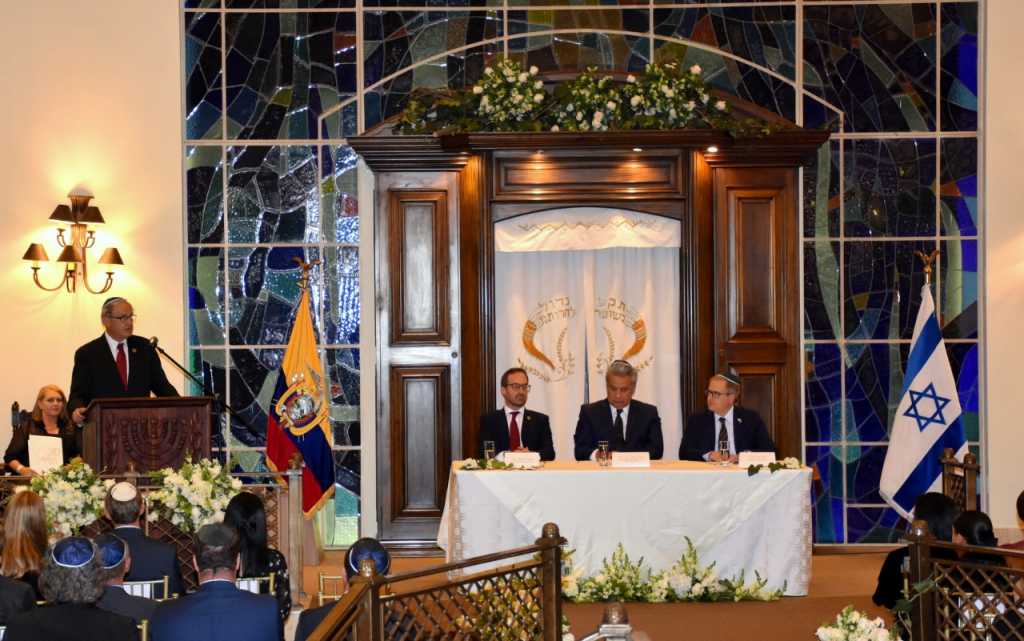
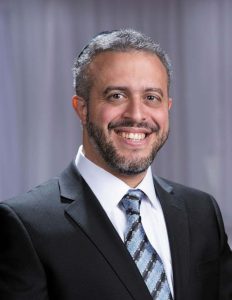
Abraham Vigoda, 45, is president of the Ecuadorian Jewish community based in Quito for almost 2 years. In an exclusive interview for Aurora, he tells the story of the community that turned 80 years old, the Jewish life that now has its 600 members and the uncertain future of a small but active kehilá, which seeks to survive many more years.
Interview: Lic. Rafael Kaufmann
"We have a hard and complicated job, but we will continue fighting forever while we have Jews living in Ecuador."

How did the Jewish community start in Ecuador?
The Jewish community of Ecuador was founded in 1938 under the name of the Israelite Benefit Association of Quito. It was created by Julio Rosenstock, a native of Austria, who first arrived in the country in 1914, hired to build part of the railroad in Ecuador.
Rosenstock returned to his native country where he was even consul of Ecuador. When the rise of the Nazi government began, he returned to Ecuador in 1934. The community was founded in 1938 with the beginning of the arrival of Jews who began to escape from Europe.
The first came mainly from Germany, Austria, Hungary, Italy, Poland, Czechoslovakia and Romania. In total, approximately 4,500 Jews arrived. Ecuador was one of the few countries that opened the doors to Jews.
Where did most of the Jews who arrived settle?
The Jews came mainly by boats to port cities and especially to Guayaquil, which has a very hot climate. Most began to migrate to the Ecuadorian highlands, mainly to Quito, with a climate relatively more similar to the countries where they lived. Within Quito, they all begin to settle practically in the same neighborhoods, where the first synagogue and the meeting center for the Jews are also built. With the passing of time they begin to be distributed in different parts of the city.
How many Jews are currently living in Ecuador and what is the nature of the community?
It was estimated that some 4,500 Jews were received in Ecuador, although many left and used Ecuador as a stopover point. In the end, the community stabilized around 1,000 Jews in Quito. At present we are around 600 Jews. We have only one synagogue in Quito, we want to stay united beyond the current.
Although the community was initially Orthodox, then we started to have a conservative tendency and today we have a rabbi of orthodox-modern tendency.
Is assimilation a challenge for the continuity of the Jewish community in Quito?
The truth is that we try to be very inclusive, but we certainly have assimilation. There are cases where, after marrying a non-Jewish person, the Jew has not returned to the community and no longer appears. There are other cases where they marry non-Jews but still attend the community especially for high holidays and some other holiday. We have conservative and orthodox conversions.
What is the future of the Jewish community of Ecuador?
We have a hard and complicated job, but we will continue fighting for as long as we have Jews living in Ecuador. It is an active community, very supportive and we believe that there is a community for many more years.